


Modern cars are computers as much as they are moving vehicles these days, and your car probably has a handy tech package inside as a result. You might have a large infotainment screen with Apple CarPlay or Android Auto, a custom Android Automotive computer, or neat novelties like wireless charging pads. If you have a car with a built-in wireless charger, you might be tempted to use it to charge your smartphone instead of paying for a third-party accessory. I certainly tried it after upgrading to a Tesla Model Y, which sports dual wireless charging pads in the center console.
The wireless charging experience in my car turned out to be a complete disaster. Slow charging, poor alignment, and overheating all squandered my attempts to charge my phone while driving. Sometimes, I'd reach my destination with less battery than I had when I left. Your car's built-in wireless charger is the worst way to keep your phone powered up during your road trip or daily commute, but making a single upgrade can flip the script.
Why your car's wireless charger isn't good enough
The charging pad in my Tesla was doing more harm than good

Wireless charging standards are constantly evolving. The newly announced Google Pixel 11 supports fast Qi2.2 25W wireless charging, whereas last year's Pixel 10 merely supported Qi2 25W speeds. That's a big year-over-year jump in speed, but it requires a wireless charger that also meets the Qi2.2 25W specifications. It's easy to upgrade a cheap wireless charger on your desk when a new Qi wireless charging version comes out, but the one in your car? Car manufacturers don't upgrade them very often, so your 2026 car might be using outdated wireless charging tech.
New smartphones typically support either Qi2 15W or Qi2.2 25W, but cars — even newer ones — could be limited to older Qi speeds. That's a problem, especially for iPhone users. iPhones can only charge at up to 7.5W using standard Qi wireless charging pads. This means a car's inbuilt wireless charger might require nearly two hours to fully charge your iPhone, unless it features a newer Qi2 pad. Of course, this isn't ideal, because few people have a daily commute long enough to significantly charge their phone's battery using a legacy Qi wireless charging pad.
The other drawback that comes with using car wireless charging pads is coil placement and positioning. Unless your car supports a magnetic Qi2 pad, there's nothing keeping your phone in place on the wireless charging pad. As you drive, your phone will shift around. This could cause it to disconnect from the wireless charging pad. Worse, it could continue to charge less efficiently. The extra power that isn't transferred to your phone's wireless charging pad turns into heat, causing your phone to thermal throttle. This results in even slower wireless charging speed, or your phone overheating and shutting down.
Car wireless charging pads also can't adapt to evolving smartphone form factors. A standard in-car wireless charger might work with a traditional iPhone, Galaxy, or Pixel phone. However, if you want to use a flip phone like the Razr Ultra 2026 or a wide foldable like the Galaxy Z Fold 8, the wireless charging coil won't be in the right spot. This is why you might want to upgrade your car's charging solution with a third-party accessory.
Upgrading to a Qi2 charging mount is money well spent
Faster speed, better efficiency, and true hands-free utility
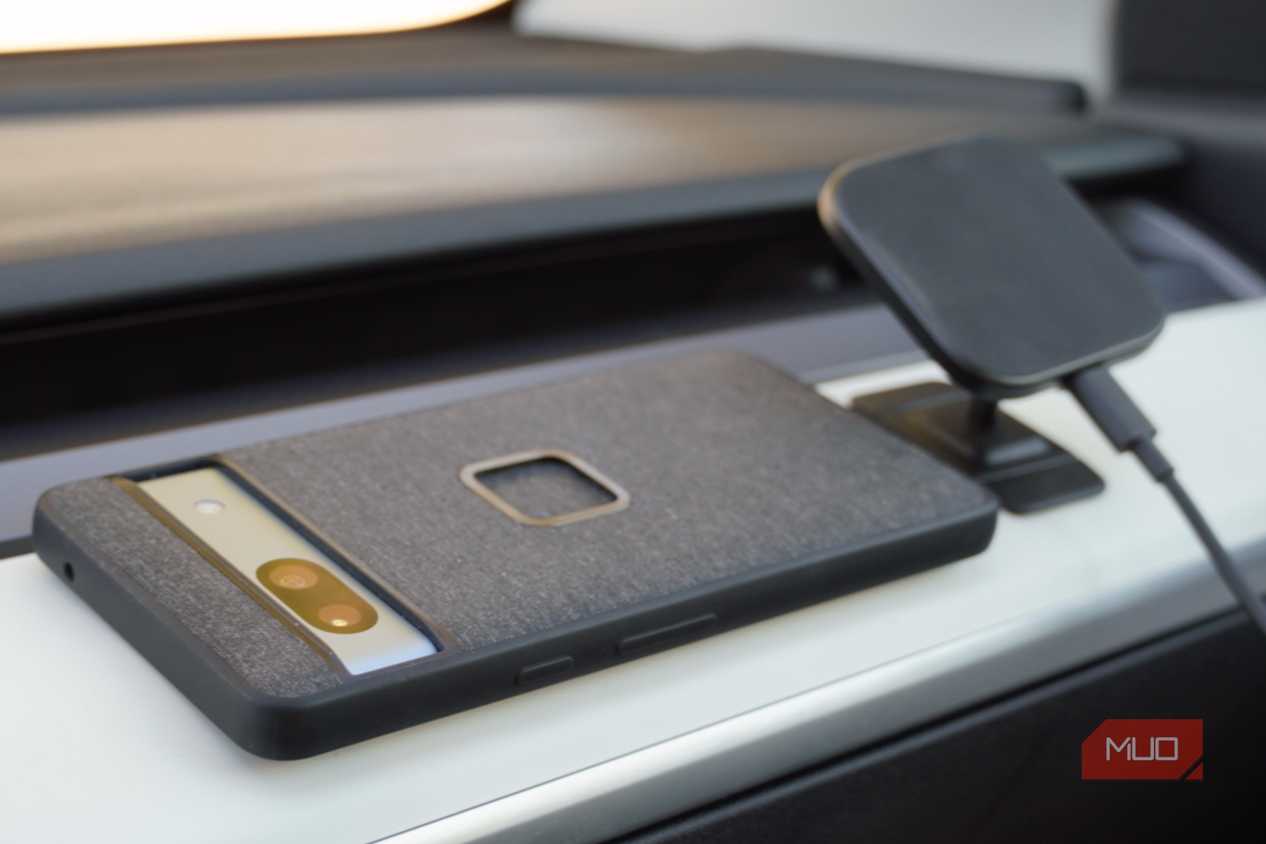
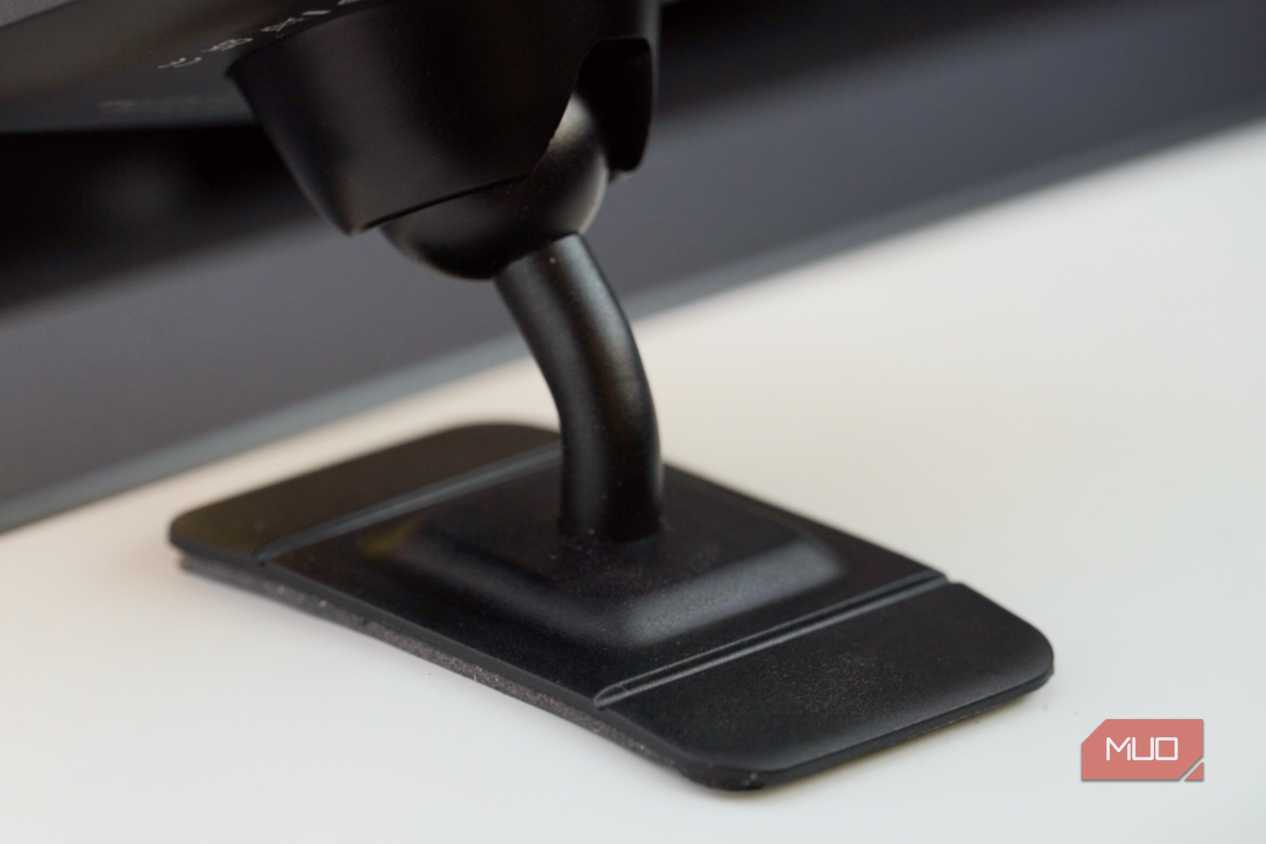
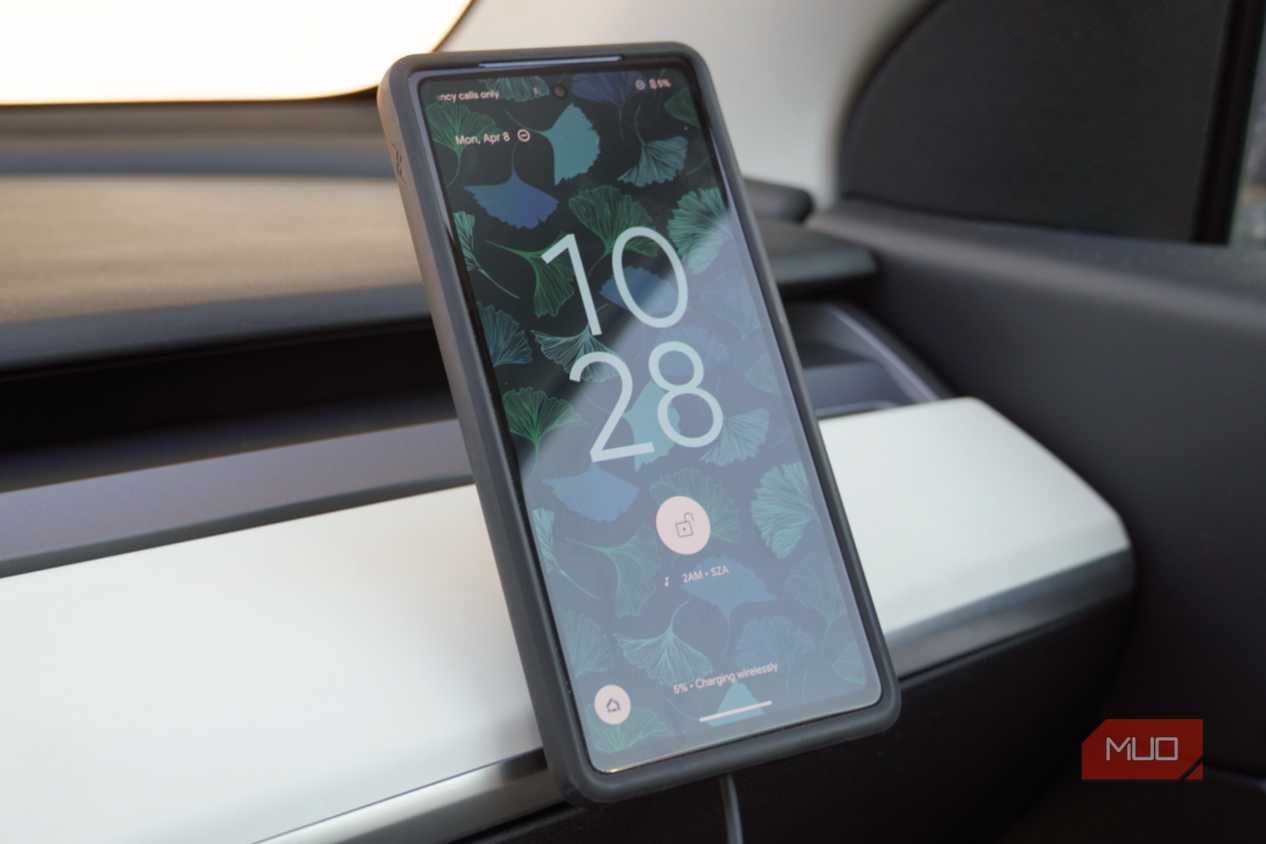
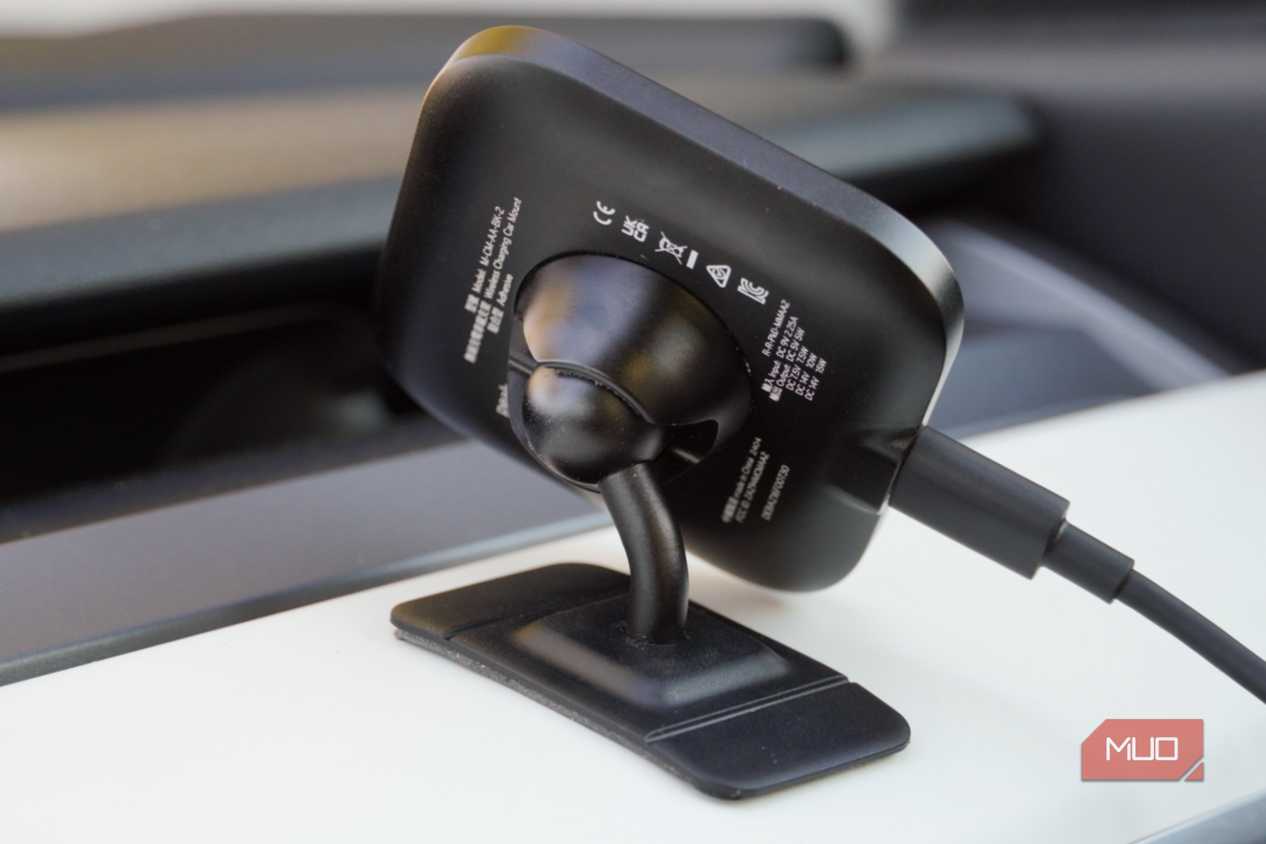
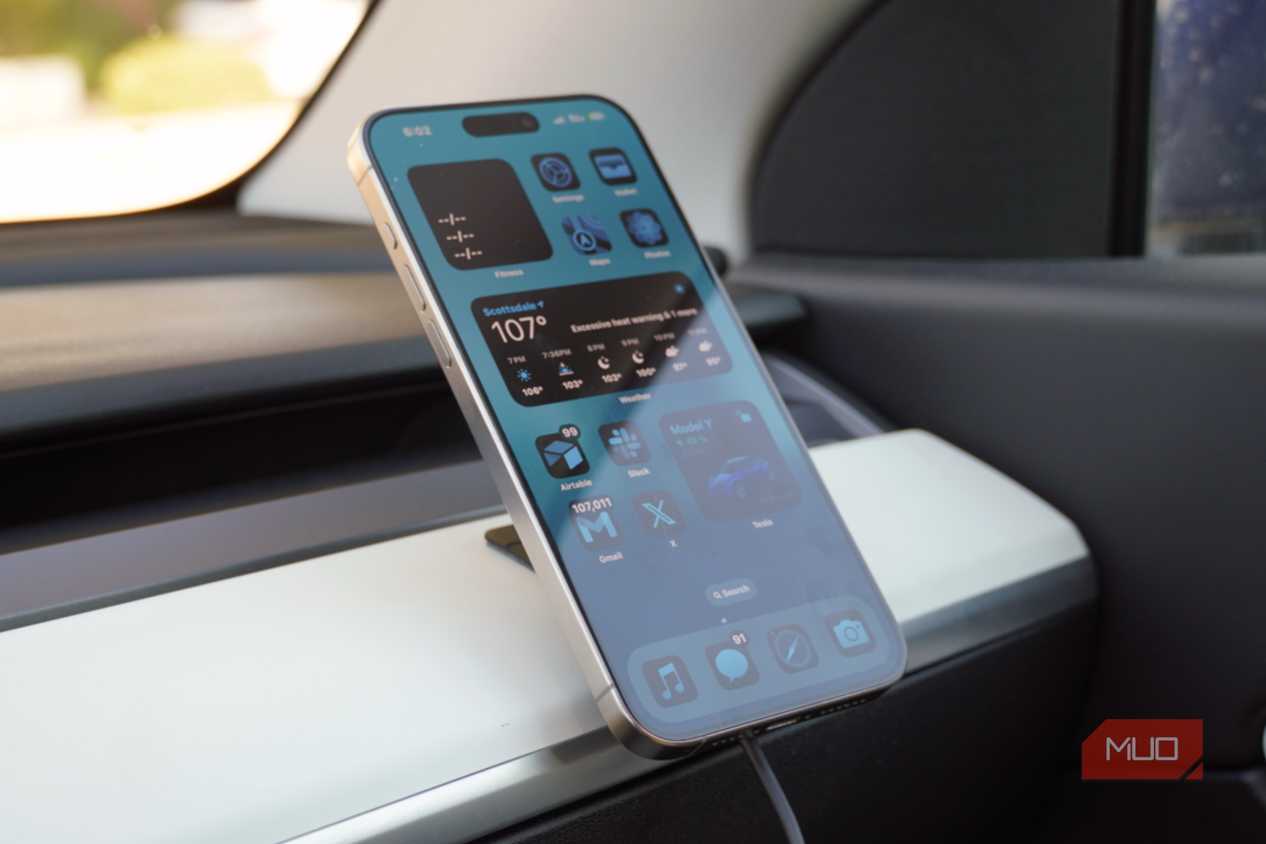


 Credit: Brady Snyder / MakeUseOf
 Credit: Brady Snyder / MakeUseOf
 Credit: Brady Snyder / MakeUseOf
 Credit: Brady Snyder / MakeUseOf
 Credit: Brady Snyder / MakeUseOf
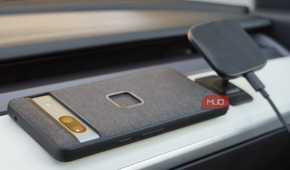
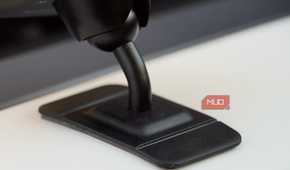
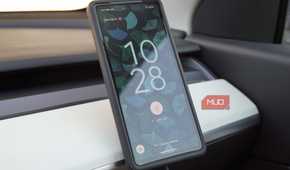
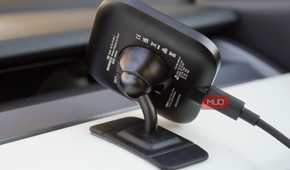
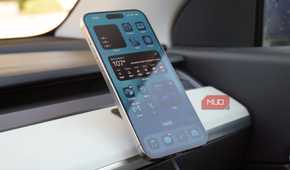
The exact specs of your car's wireless charger will depend on your make, model, and year. In my case, the dual wireless charging pads in my Tesla Model Y only support between 5W and 10W of power. This is because it's an older model, and the newer ones support up to 15W of power. This is before thermal throttling takes control of your phone's charging speed. Your car's wireless charger gets hot, and you'll likely never see the highest rated speeds in real-world conditions. As such, upgrading to a third-party wireless charger can be worthwhile — even if it has the same specs as your car's wireless charger on paper.
I tried the Peak Design Qi2 Car Mount, which supports up to 15W magnetic wireless charging. I also tested a Qi2 25W wireless charger from Ugreen, and both outperformed the wireless charging pads built into my Tesla. The Qi2, MagSafe, and Pixelsnap support included with both third-party wireless chargers ensures perfect alignment for peak efficiency. I noticed my phones didn't overheat as much on the third-party charging mounts compared to the first-party charging pads in my center console.
The dashboard and vent mounts put my phones in a better viewing position than the inbuilt wireless charging pads. If you want to use your phone for hands-free navigation or calling, a mount places the device in your peripheral vision. With a traditional in-car center console wireless charging pad, you'd have to look down to achieve the same result. For safety reasons, you should always keep your eyes on the road. Switching to a third-party wireless charger improved speed, efficiency, and helped me safely use my phone for navigation — completely hands-free.
The best alternative is actually the simplest
If charging is your goal, using a cable beats a wireless charging pad

The benefit of a wireless charging mount is being able to see your phone and keep it charged simultaneously. That said, if your main goal is charging, there's an even simpler solution. I use a regular charging cable any time I need to power up my phone in a pinch. I ignore the built-in wireless charging pads and any third-party mounts I keep in my car, because nothing beats the speed and efficiency of a cable. Whereas a Qi2.2 wireless charging pad is limited to 25W speeds, the best Android phones charge at up to 80W speeds over a cable.
Plus, opting for a trusty cable will save you money. If your car has a USB-C port, all you need is a cable. Those with a 12V car socket only need to buy a power adapter from a reputable brand, which converts the 12V DC power to USB charging ports with AC power. It's much cheaper than buying a fancy wireless charging mount, and it's much faster than using your car's built-in wireless charging pads.
After I added a budget USB-C charging cable to my car, I realized I didn't need the outdated and inefficient wireless charging pads in my Tesla's center console.

Peak Design Mobile Qi2 Charging Car Mount
- Qi-Certified
- Qi2 15W
- Weight
- 95.4g
- Materials
- Machined/anodized aluminum mounting head & stem Grippy silicone mounting pad with Tinuvin 770 UV-stabilizer High-temp neodymium mounting magnets
Peak Design's Qi2 wireless charger uses a ballhead mount for flexibility and an adhesive pad to attach securely to your car's dashboard. It works with Qi2-enabled magnetic phones or cases, delivering up to 15W speeds. The adhesive attachment method means it's compatible with just about any car.