


I bought my first Ryobi ONE+ battery to run a drill. A decade later, those same 18V packs power gear that never touches a screw or a stud, and a single charged battery is now as likely to inflate a tire or run a cooler as it is to spin a bit. The platform grew past tools while I wasn't paying attention.
That reach is the whole argument for staying on one system, because every pack you own gets more useful the moment Ryobi releases another thing that clips onto it. It's why I've come to treat the battery, not the tool, as the real investment. Here's the non-tool gear that earns its spot on my shelf, most of it running off packs I already had.
A tire inflator that runs on a pack I already own
No separate power source to hunt for


 Credit: Jonathon Jachura / MUO
 Credit: Jonathon Jachura / MUO
 Credit: Jonathon Jachura / MUO
 Credit: Jonathon Jachura / MUO
 Credit: Jonathon Jachura / MUO
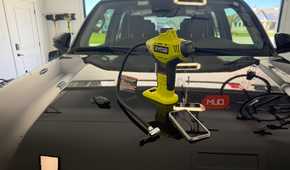
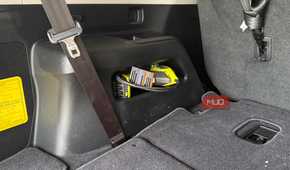
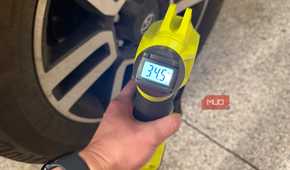
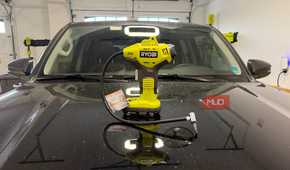
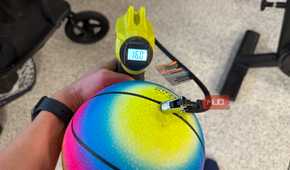
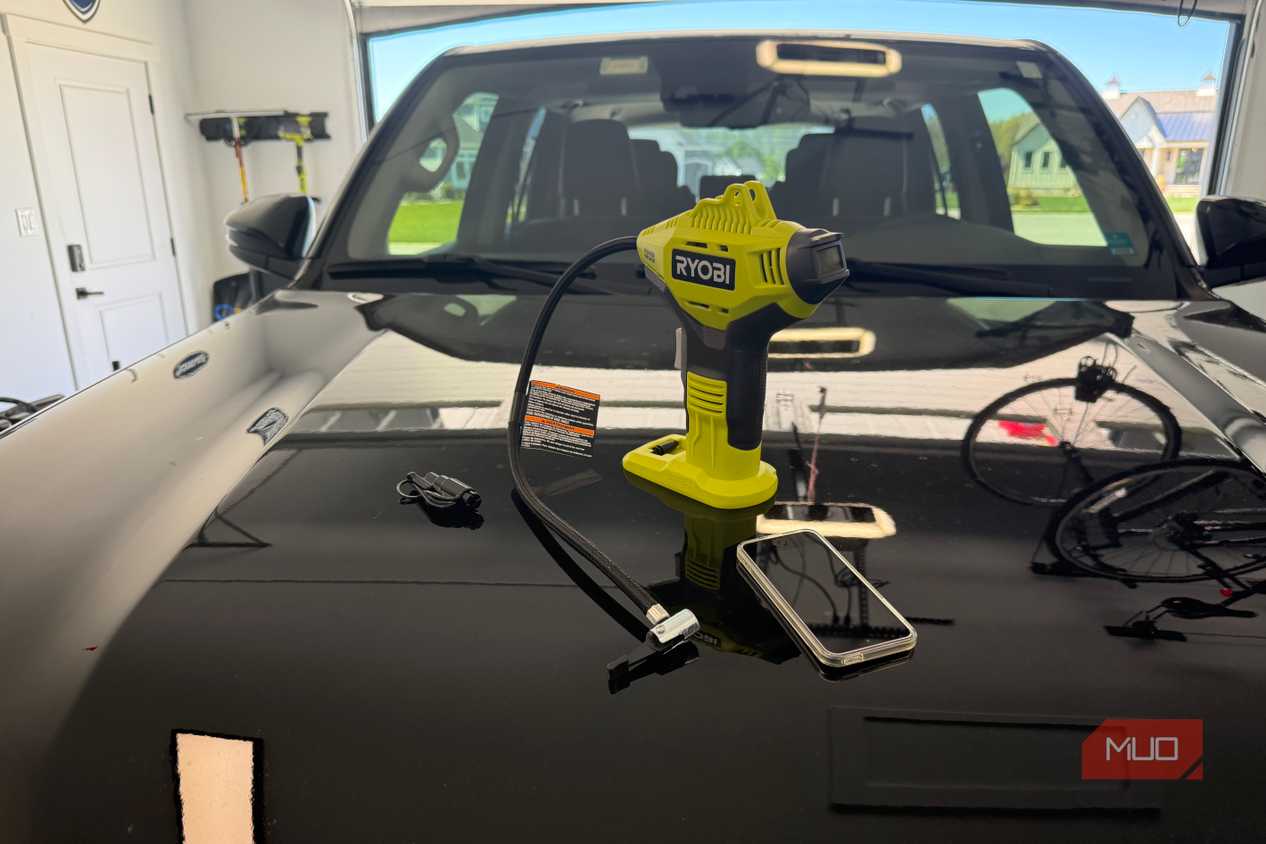
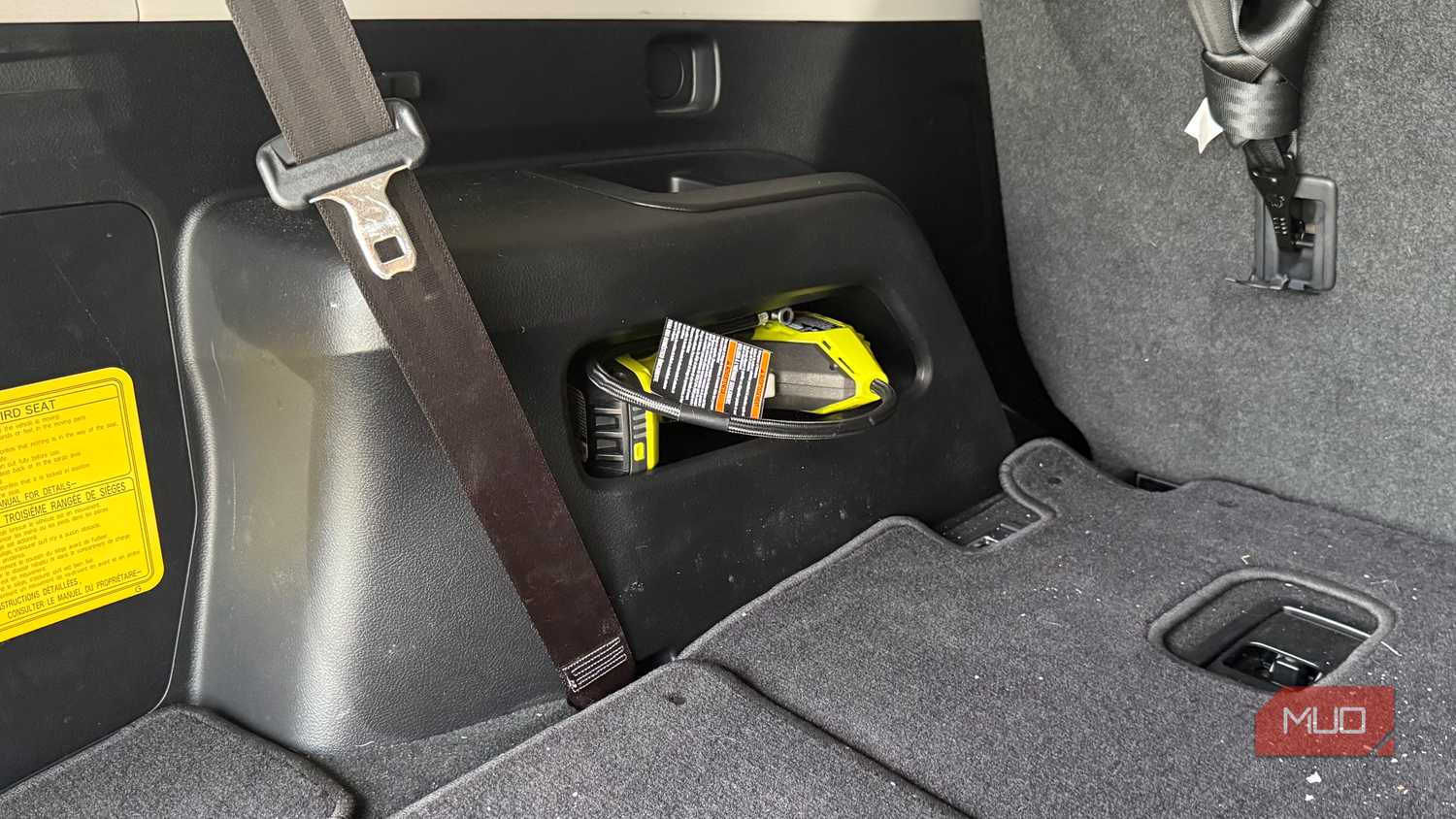
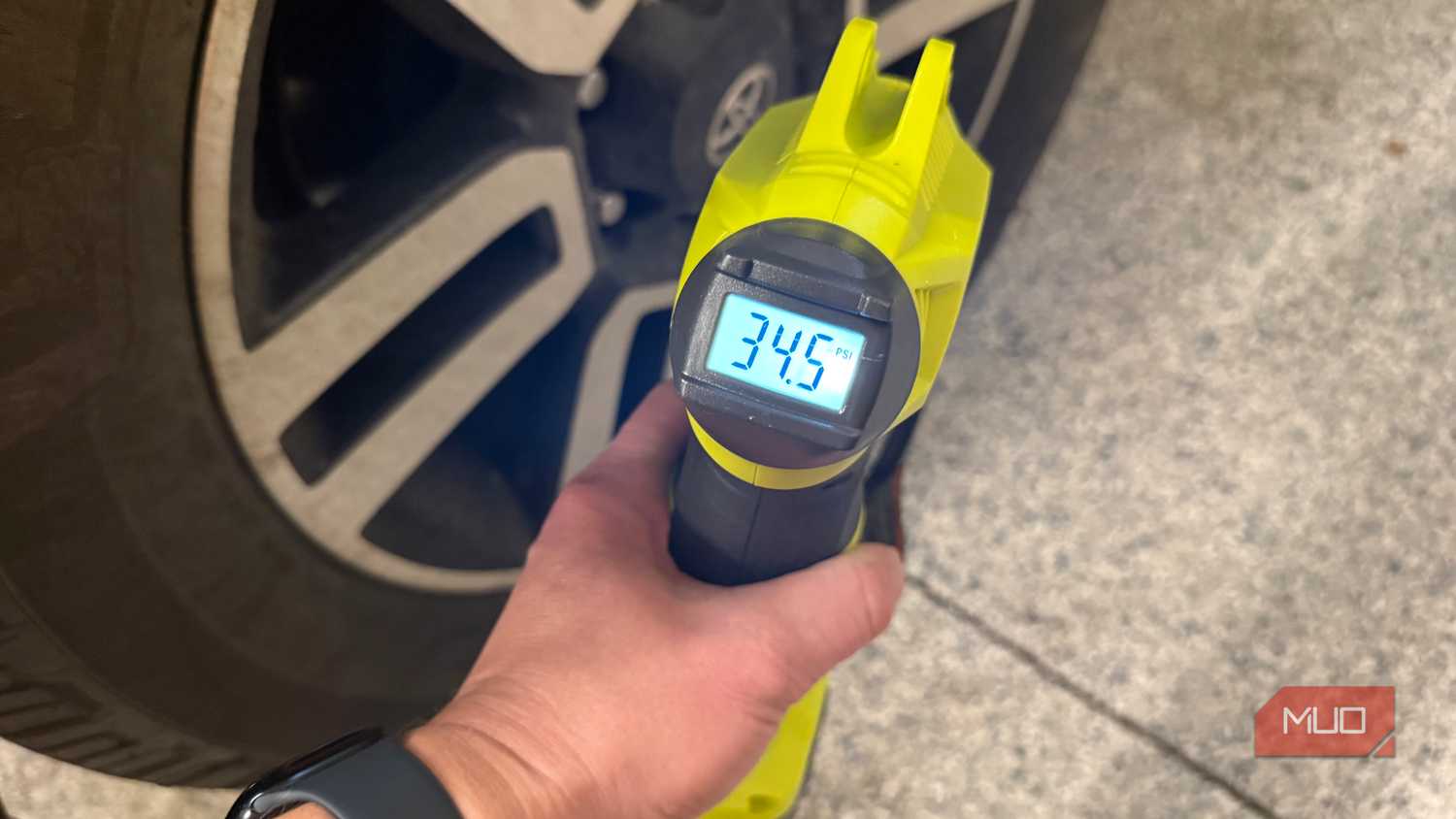
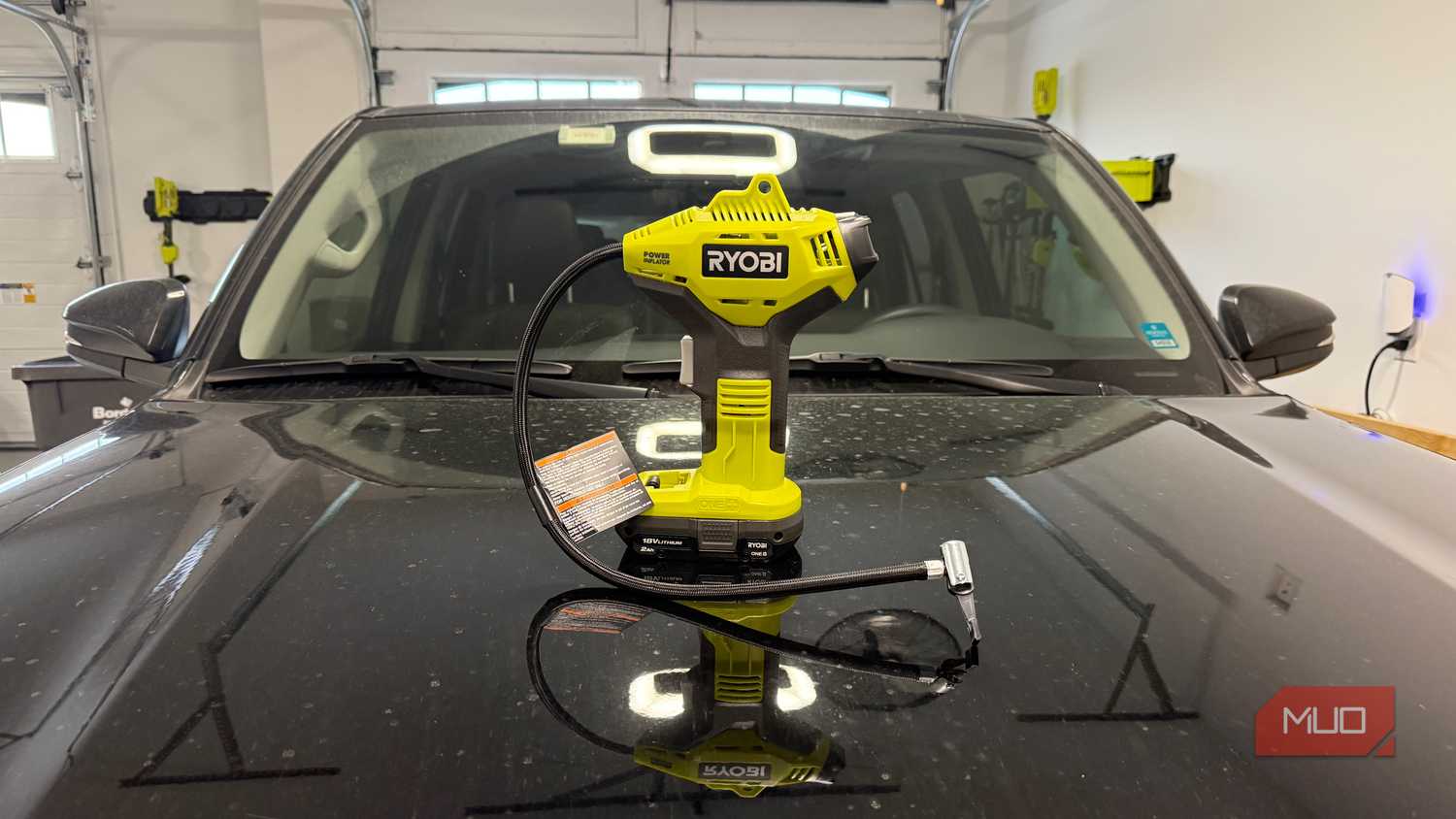
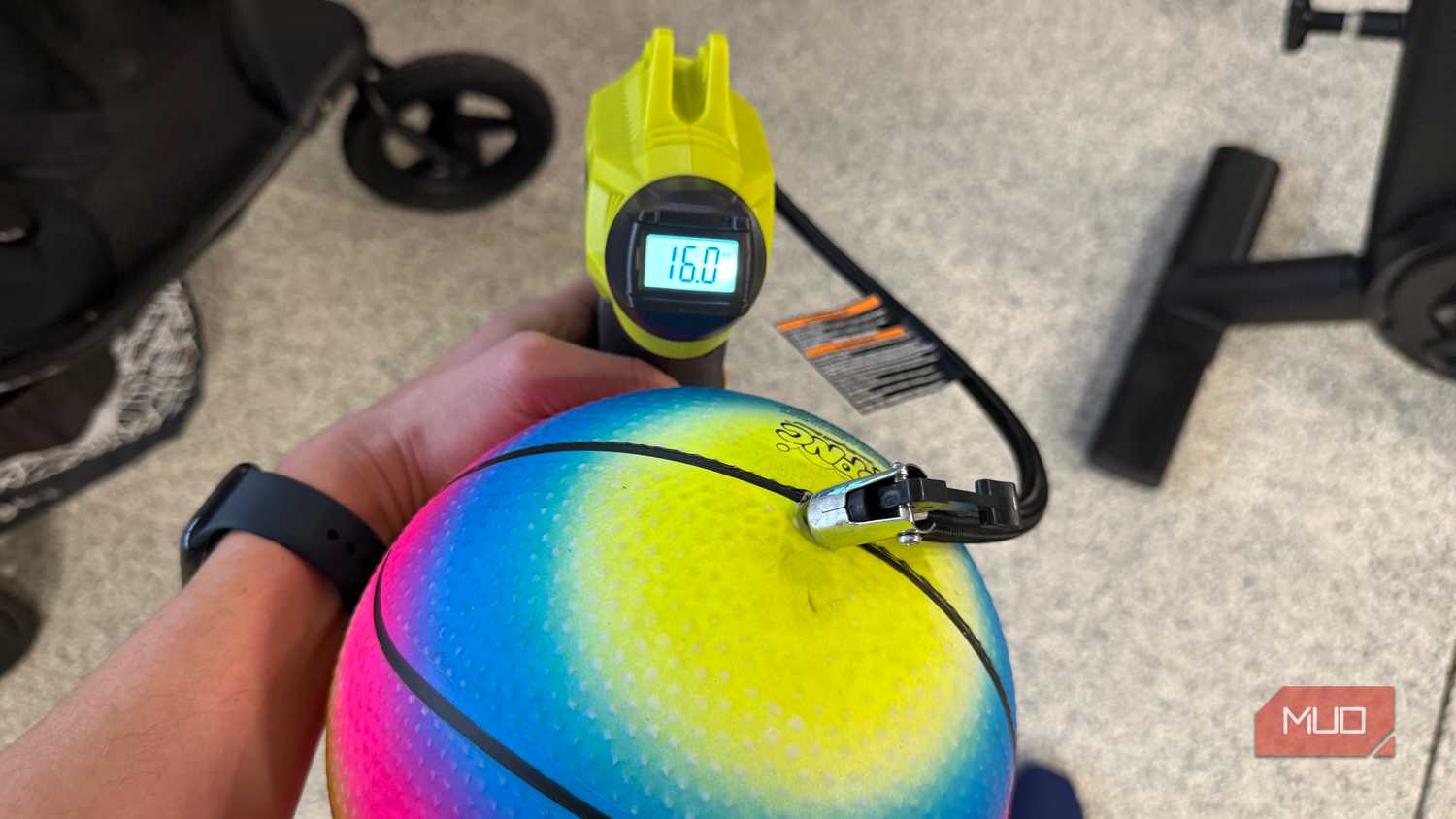
The best thing about the Ryobi inflator has nothing to do with the inflator. It runs on the same 18V pack that spent the morning in my drill. I grab a charged battery off the shelf, clip it on, and I'm done. The digital display lets me dial in a target PSI and walk away, and it cuts off on its own when it gets there.
I keep my 4Runner, the utility trailer, and a stubborn wheelbarrow tire topped off with it. It stays in the garage instead of a car trunk, because a charged pack is never more than a few feet away. This is one of the Ryobi tools I recommend most, for a dull reason: it erased a small recurring hassle and asked for nothing I didn't already have. Bare, it runs around $40–$60.
A cordless air compressor for the jobs an inflator can't handle
I use mine once a year, and it still earns the trip


 Credit: Jonathon Jachura / MUO
 Credit: Jonathon Jachura / MUO
 Credit: Jonathon Jachura / MUO
 Credit: Jonathon Jachura / MUO
 Credit: Jonathon Jachura / MUO
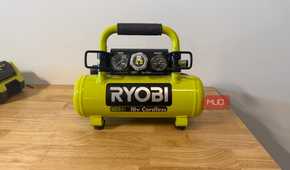
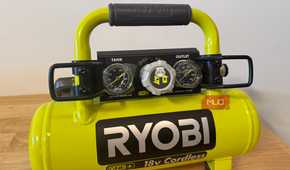
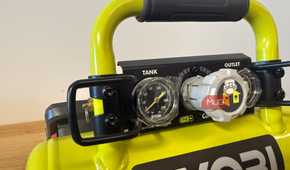
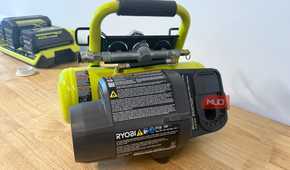
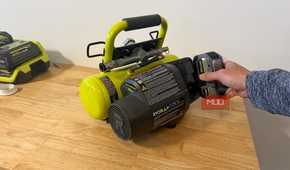
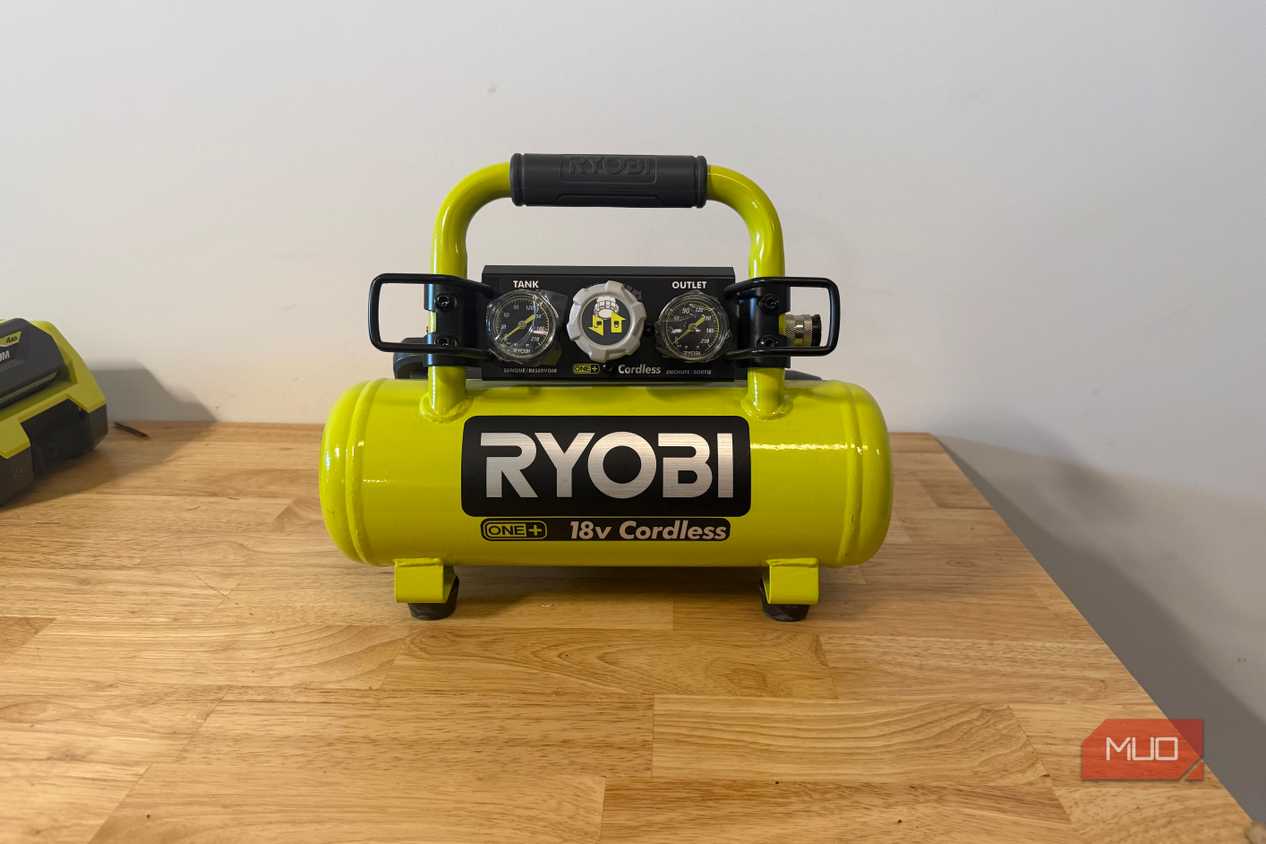
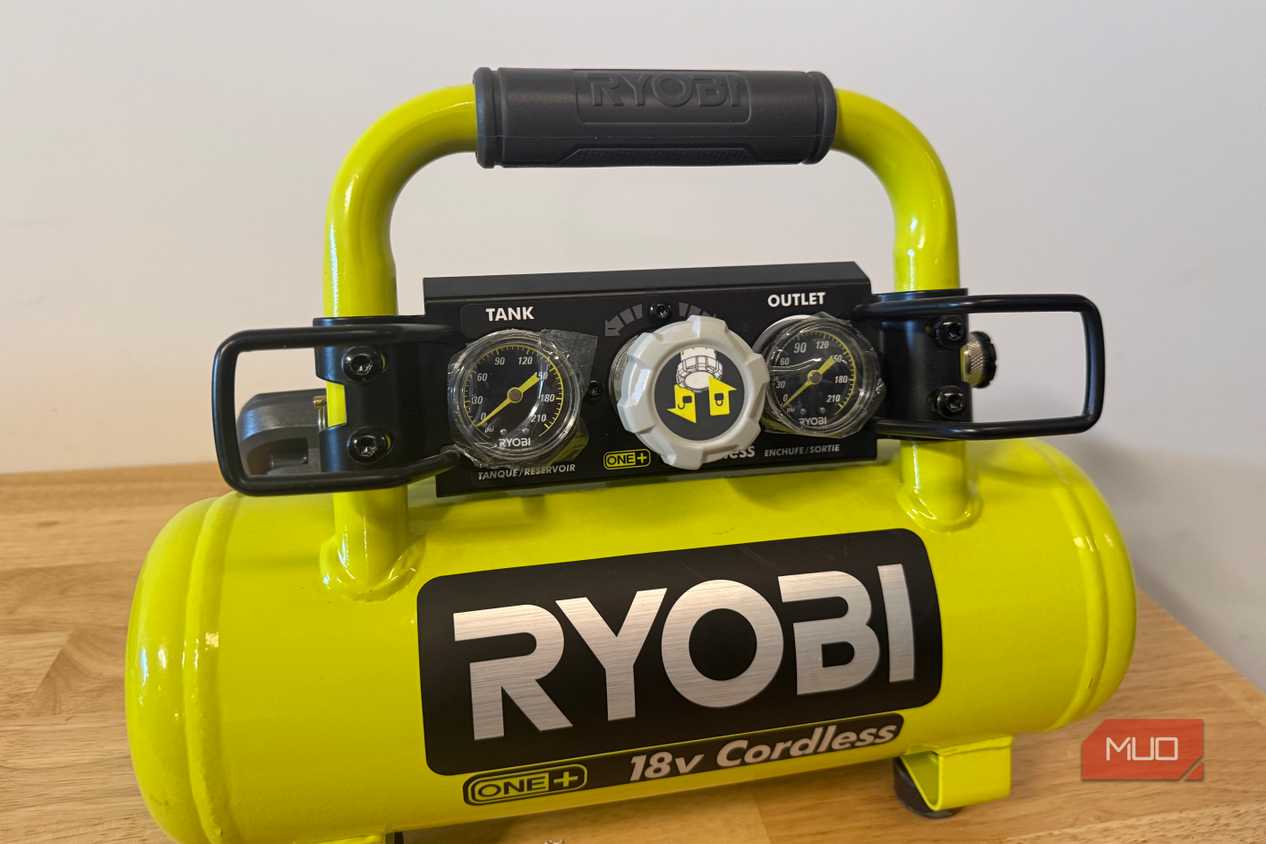
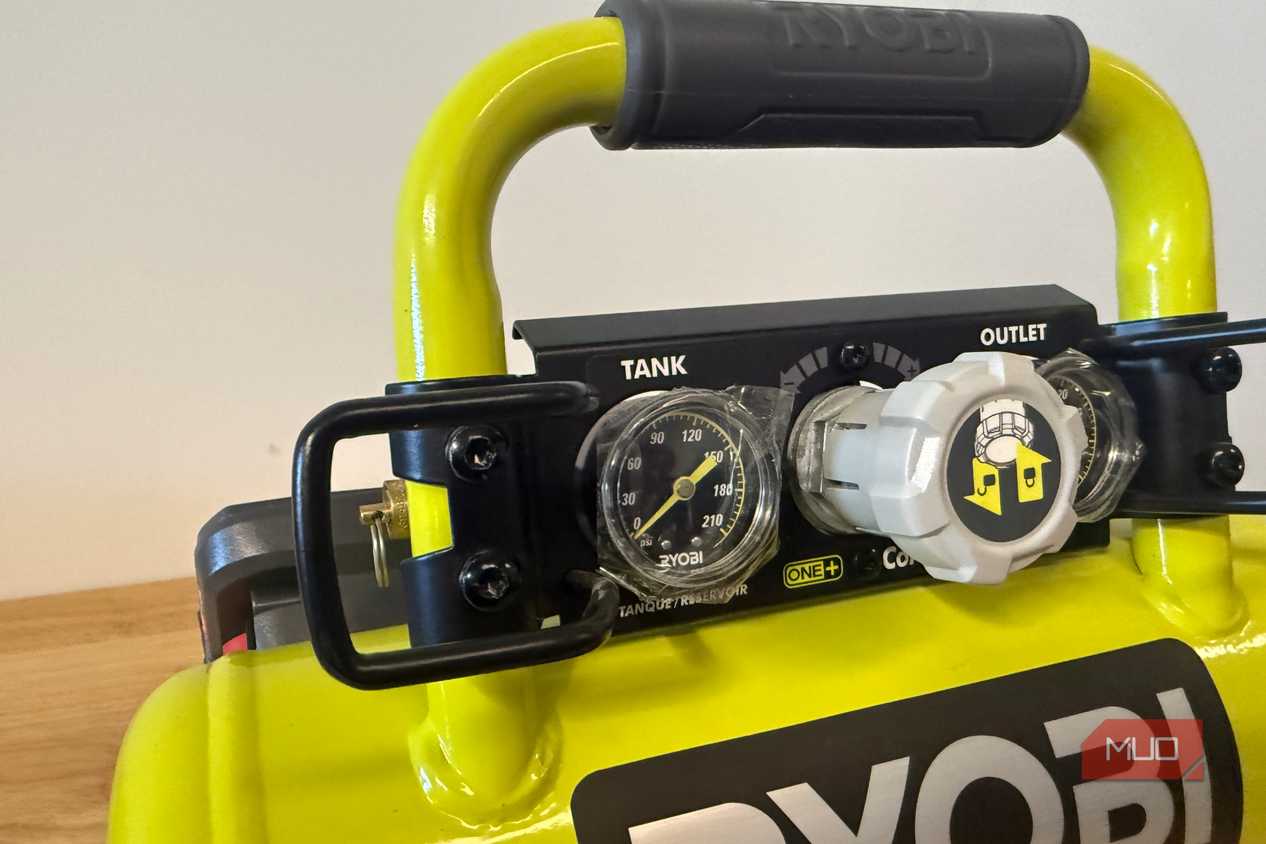
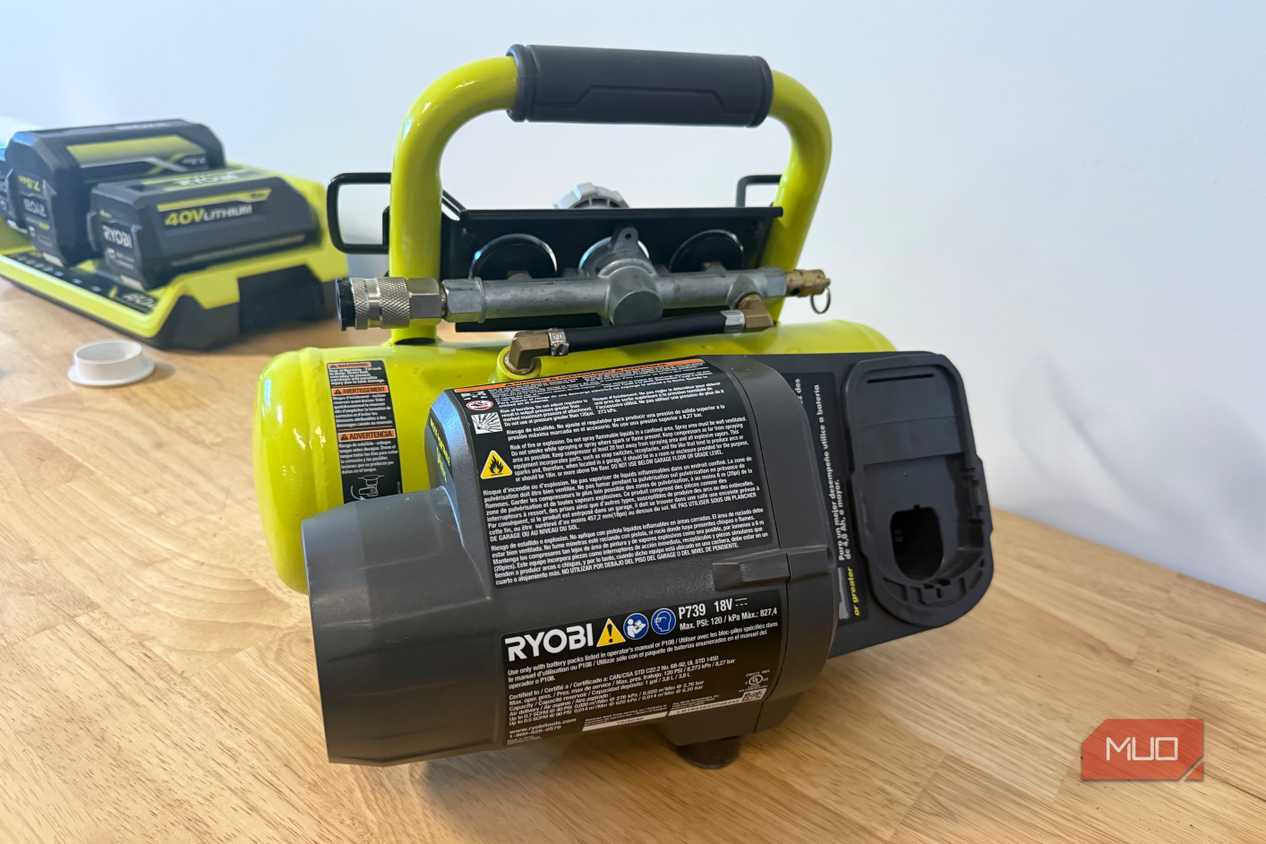
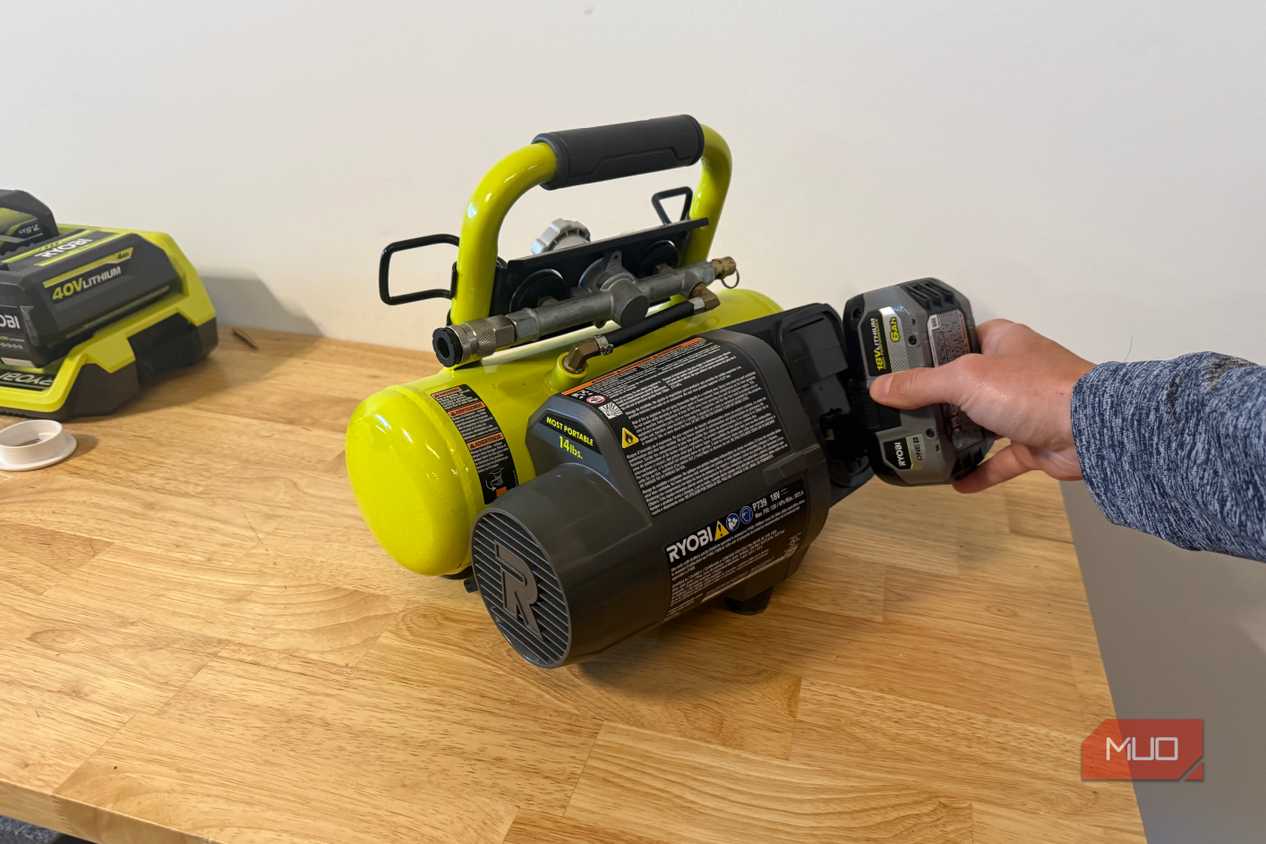
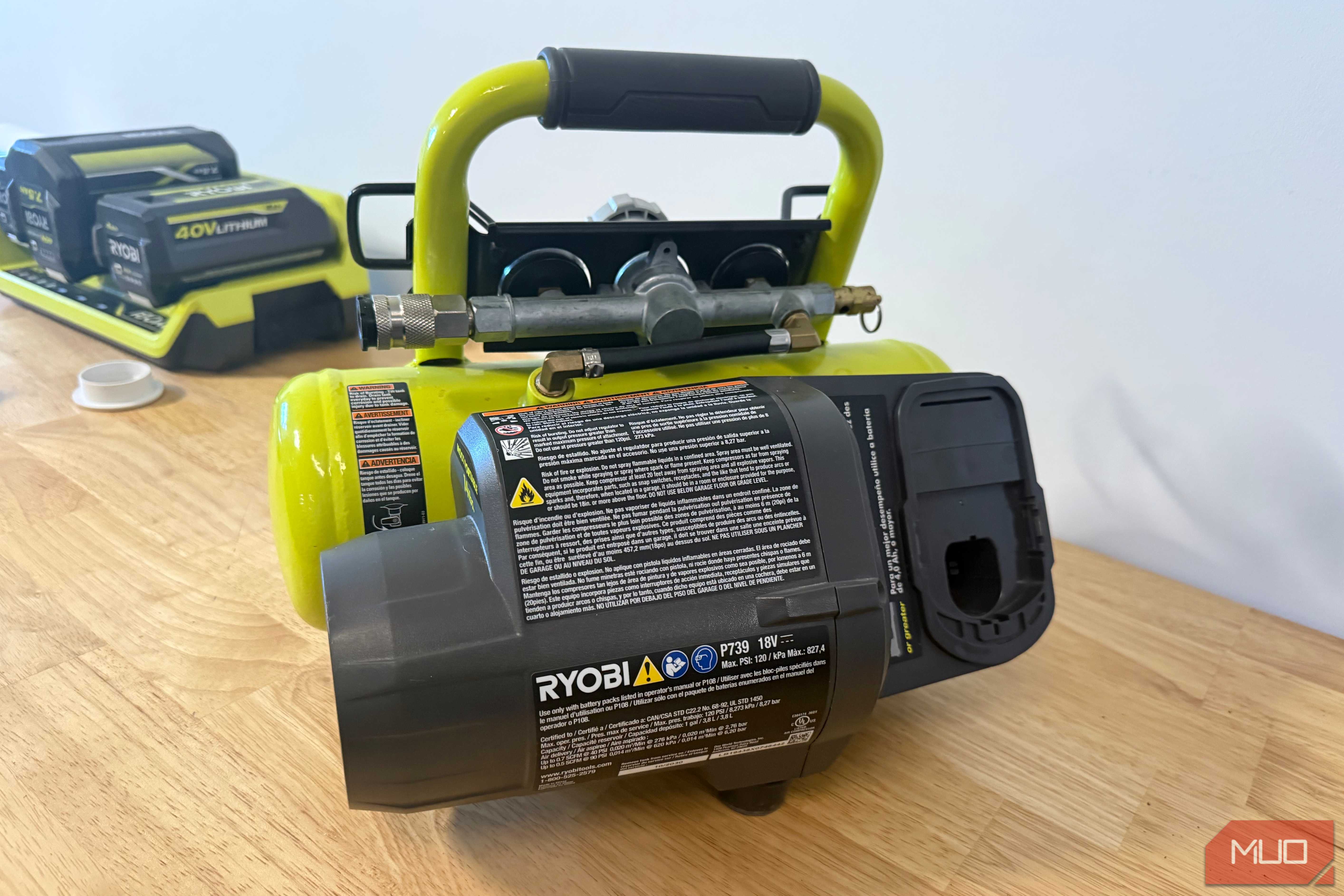
My small Ryobi air compressor comes off the shelf exactly once a year, right before the first hard freeze, to blow out the drip irrigation lines feeding my hydrangeas. Water left sitting in those lines splits them when it freezes, and a few minutes of compressed air clears every zone before winter can do the damage.
Its the same battery story as the inflator, with more muscle behind it. An inflator tops off a tire; a compressor drives brad nailers, seats a tire bead that won't cooperate, and moves enough air to clear a whole irrigation run. Ryobi sells them on both the 18V and 40V rails, and the gap between the two platforms mostly comes down to how long you need the air to keep flowing. For a once-a-year job like mine, the 18V unit is plenty. A kit typically lands around $99–$150.
A power inverter that turns a battery into a wall outlet
AC and USB anywhere a pack will reach


 Credit: Jonathon Jachura / MUO
 Credit: Jonathon Jachura / MUO
 Credit: Jonathon Jachura / MUO
 Credit: Jonathon Jachura / MUO
 Credit: Jonathon Jachura / MUO

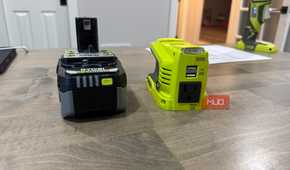
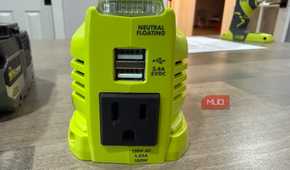
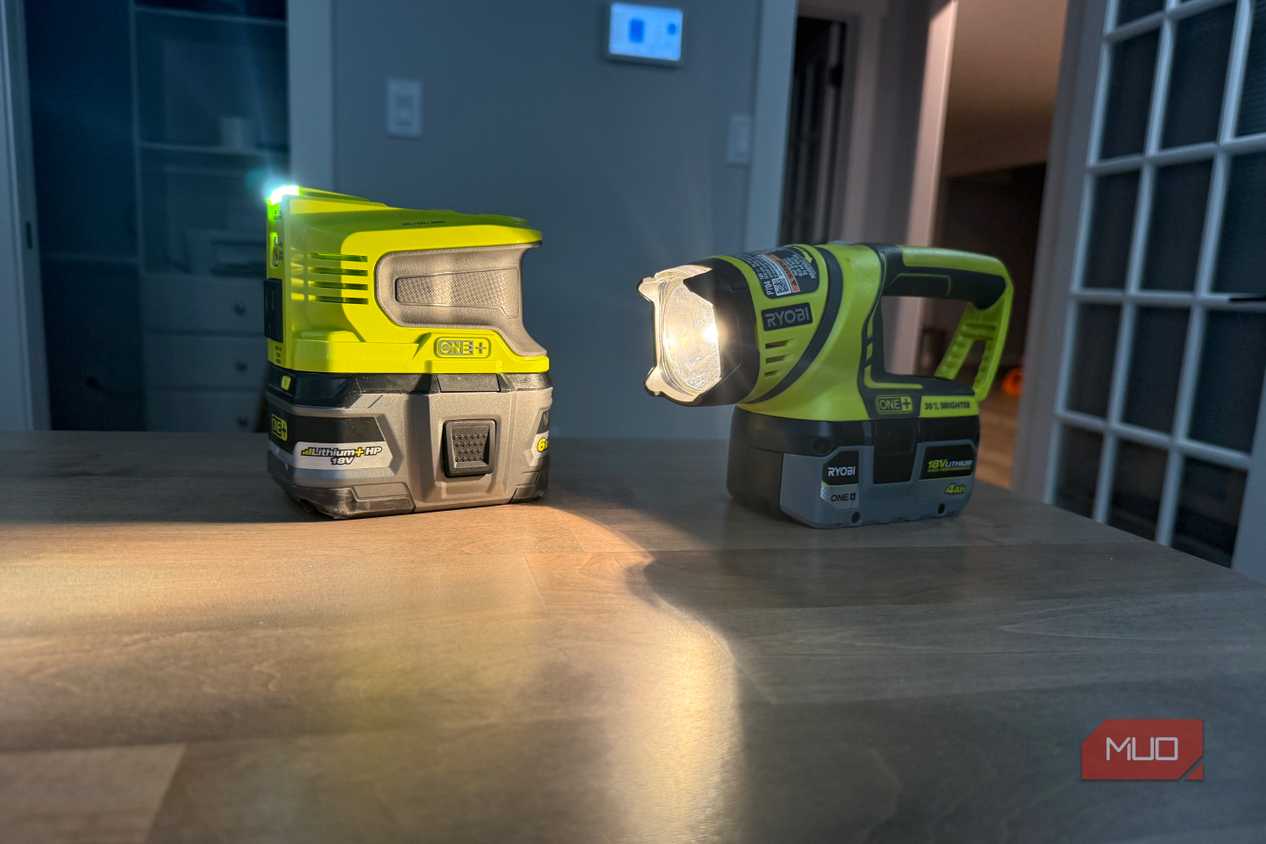
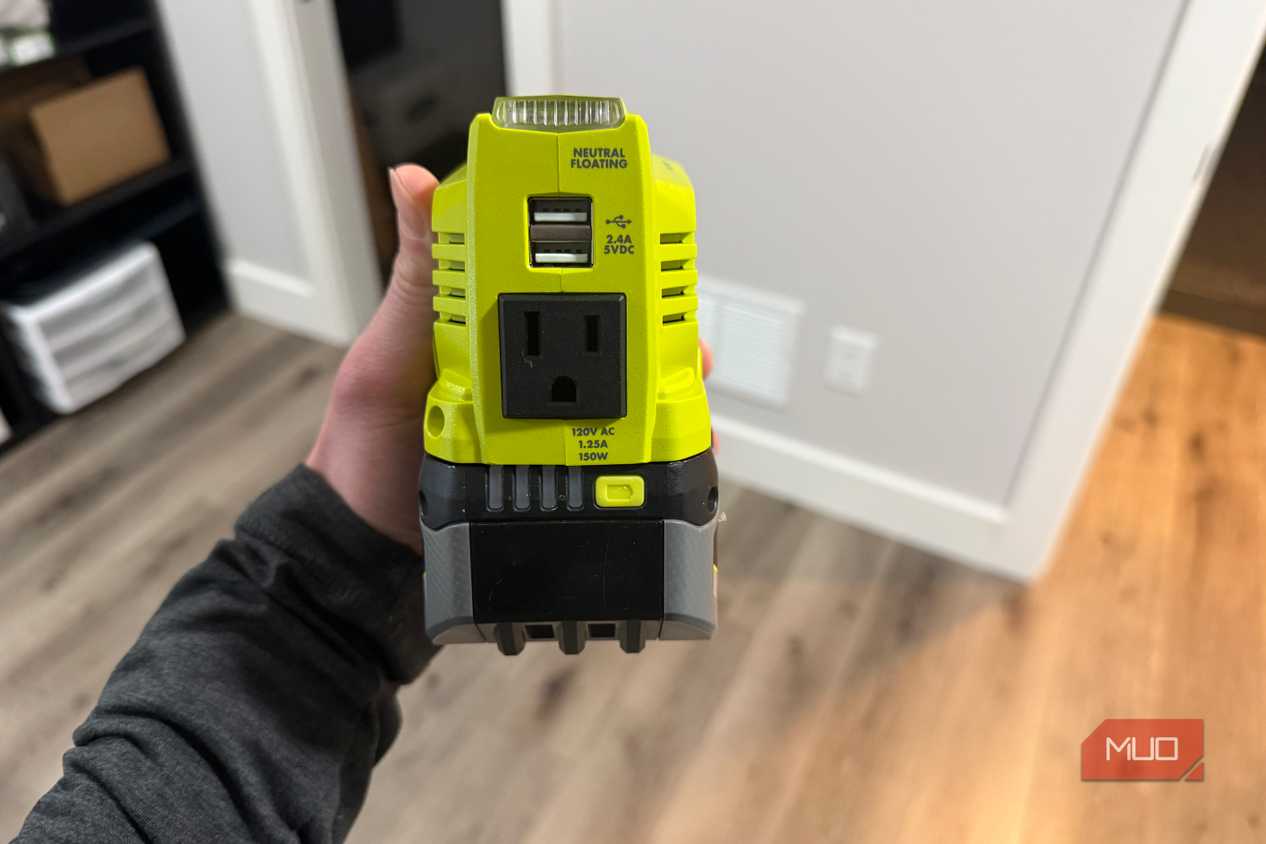
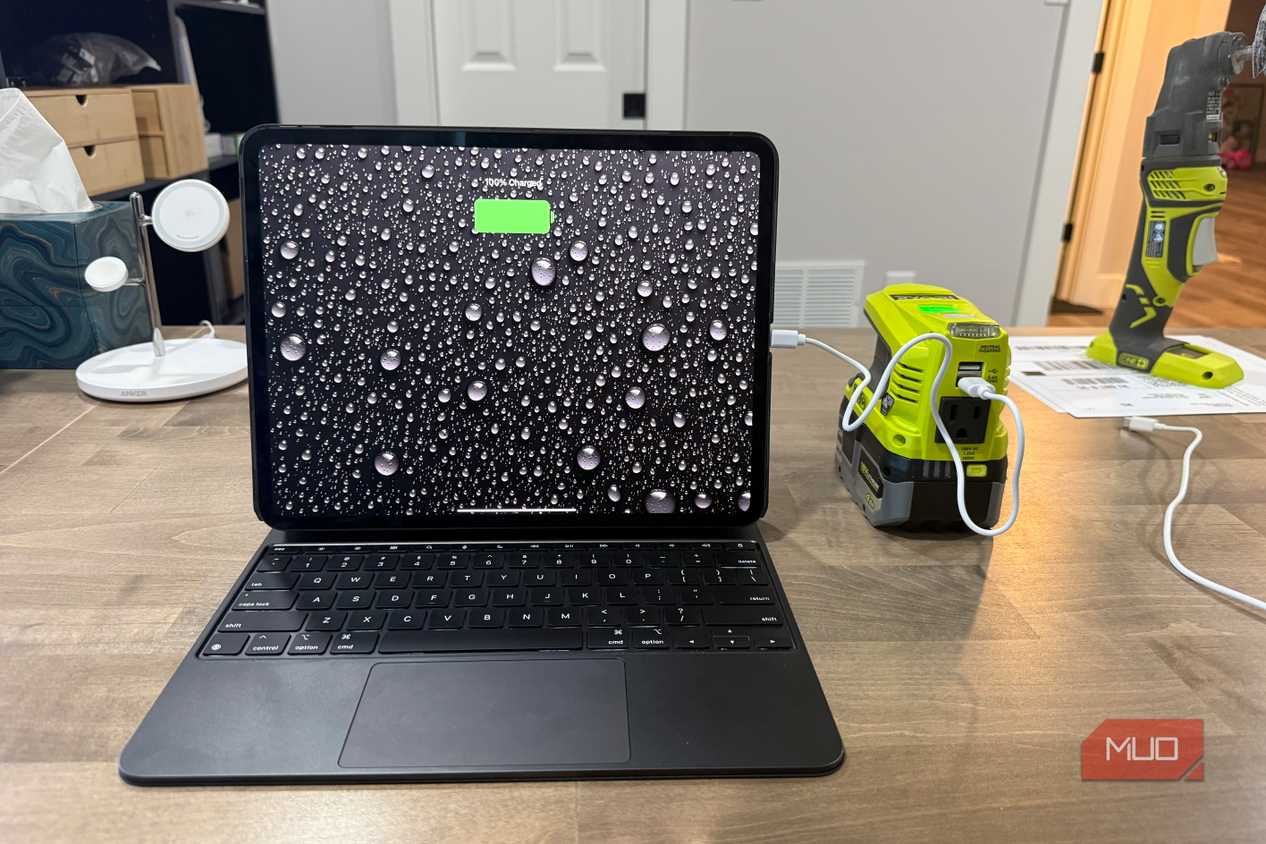
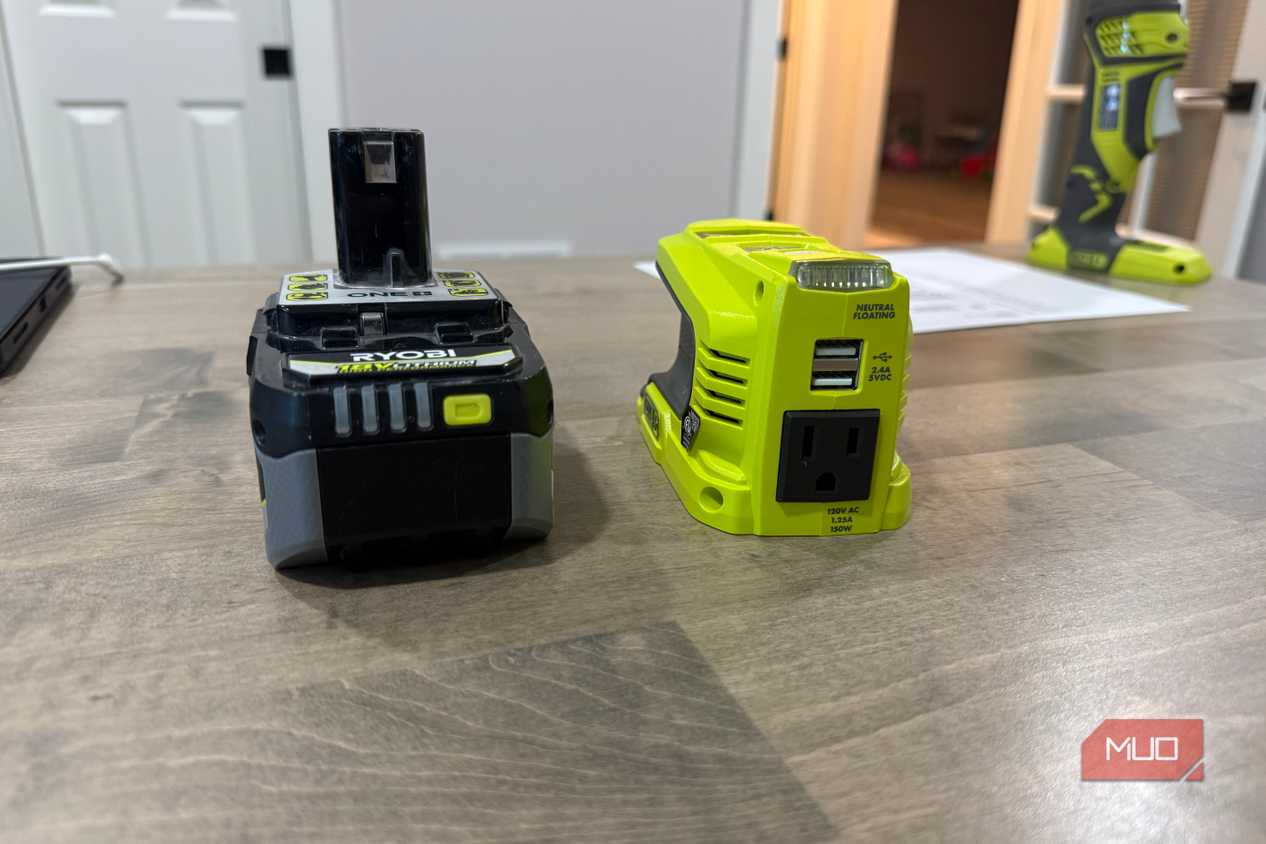
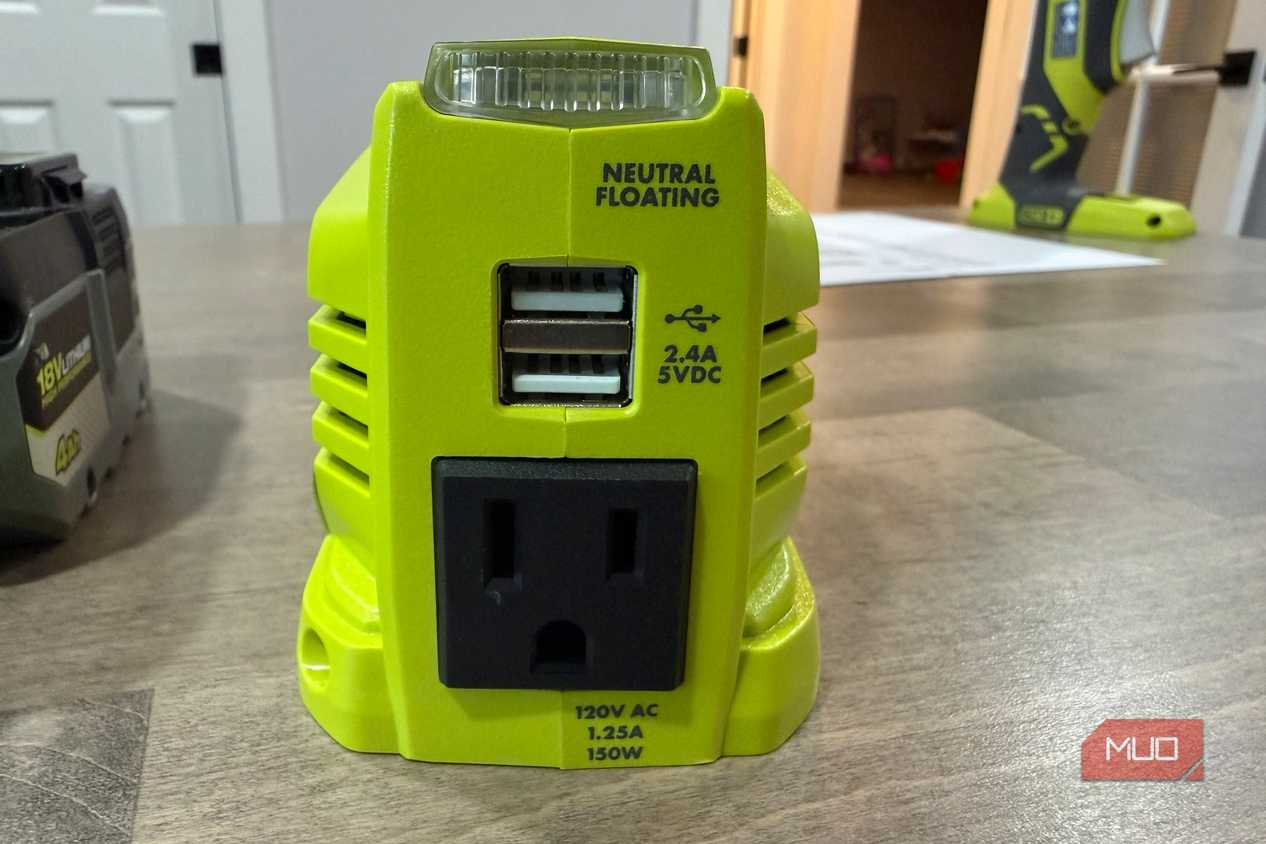
Clip a pack onto Ryobi's powered inverter and you get standard AC outlets plus USB, which means a battery from my drill can charge a phone, run a laptop, or light up a work area far from the house. I've leaned on mine during short outages and out on the back acreage where no outlet reaches. Runtime tracks the pack you clip on.
A compact battery keeps a phone charger going for a while, and a high-capacity pack carries a laptop through a full work session, which is one more reason to think hard about which battery packs are worth owning. Ryobi also builds larger standalone power stations for people who want to keep a fridge or a medical device running through a longer outage. Those start to blur the line between a tool accessory and a home battery backup. The inverter runs about $40–$70; the bigger stations climb well past that.
Coolers and misting fans for the hottest stretch of summer
Real refrigeration, not just an ice box

Ryobi's hybrid power cooler actually refrigerates. It isn't a foam chest packed with ice. It drives the interior temperature down and holds it there, running roughly 23 hours on a pair of high-capacity packs, or indefinitely off a 12V car socket or a wall plug. Load it the night before a tailgate and your drinks stay cold into the next afternoon, with no bag of melting ice sloshing around the bottom.
For airflow, the bucket-top misting fan clamps onto a 5-gallon bucket and throws a cooled mist across a patio or a job site, while the Whisper Series fans handle the quiet version for a garage or a kid's ballgame. You clip on a battery you already charged for a tool, and the pack that ran a saw at 9 a.m. keeps you comfortable by 3 p.m. Coolers sit higher, often $250 and up; fans land closer to $50–$90.
Heated jackets that draw from a tool battery
Wearable gear closes the loop

A drill battery warming a jacket sounds like a stretch until you spot the dock. Although Ryobi doesn't currently offer heated jackets and hoodies, other brands like Milwaukee do. My bet is Ryobi eventually releases one as it already offers a heated cushion in some markets. Heated jackets carry a small pocket adapter that seats an 18V pack, and carbon-fiber elements spread the heat across your chest and back. A compact battery keeps the panels warm for a few hours, and a larger pack stretches that toward a full day outside.
Anyone who works, hunts, or fishes in the cold gets to lean on the same battery lineup that already runs their tools. The adapter also puts out USB, so the jacket doubles as a way to keep a phone alive in weather that kills it fast. Budget around $90–$130 for a jacket with the required adapter, and less if you already own batteries, which by this point in a Ryobi setup you almost certainly do.

One platform, more jobs every year
The pattern is hard to miss once you've lived with it. You buy into Ryobi for a drill or a string trimmer, and the batteries slowly outgrow the reason you bought them. A pack charged for a Saturday project ends up inflating a tire on Sunday, chilling a cooler in July, and warming a jacket in December.
None of that gear needs its own power source, its own charger, or its own corner of the shelf. That's the quiet payoff of committing to one battery system. Every pack you own keeps finding new work, and Ryobi keeps handing it more to do.